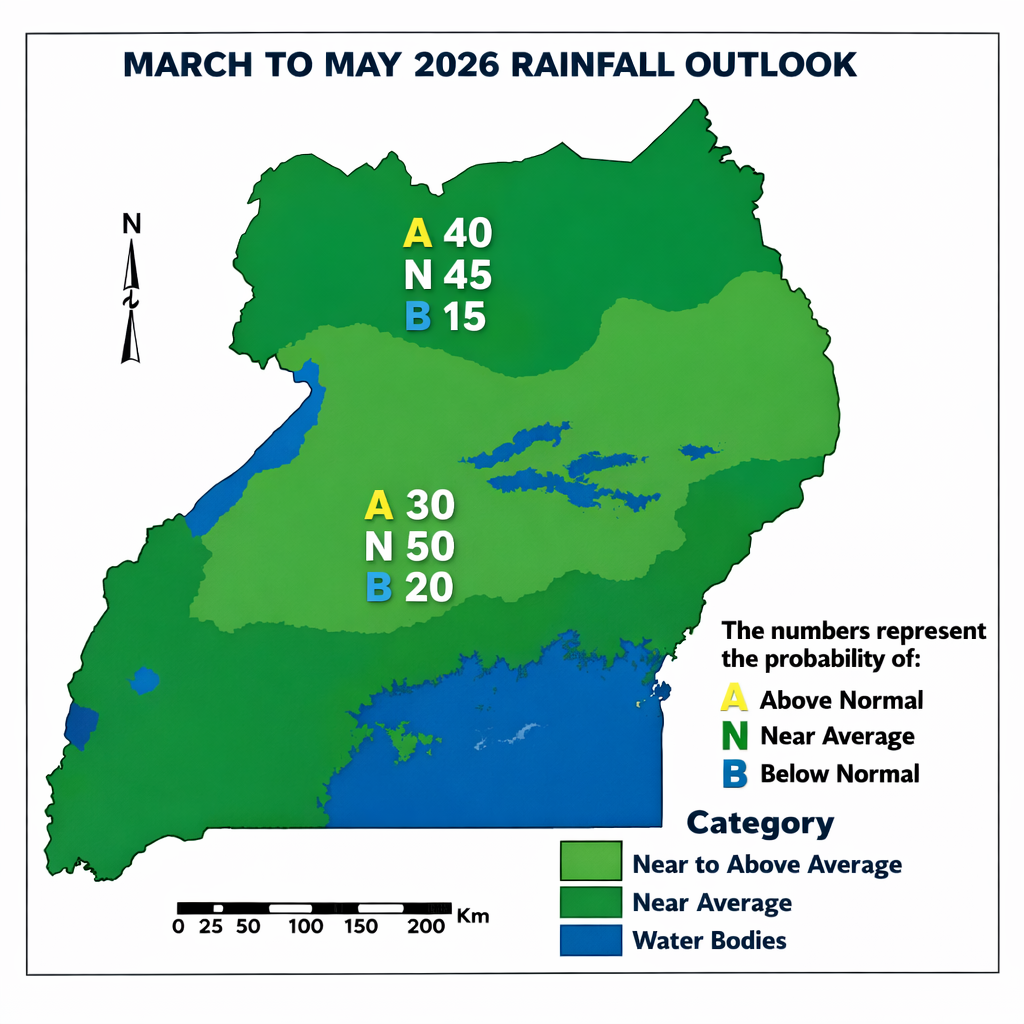
Uganda is entering the March–April–May (MAM) 2026 first rain season, one of the two main rainy seasons that support crop production across most parts of the country. According to the seasonal outlook issued by the Ministry of Water and Environment, most parts of Uganda are expected to receive near-normal rainfall, with some areas likely to receive above-normal rainfall during this period.
This forecast has important implications for crop production, livestock management, water resources, and disaster preparedness across the country.
Rainfall Outlook for Uganda
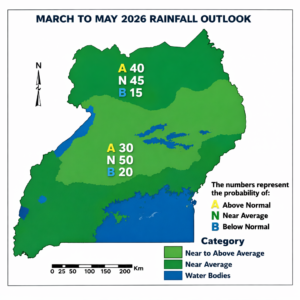
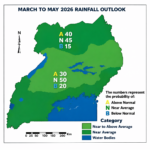
The rainfall forecast map shows that most districts will receive near-normal rainfall, while parts of the west, central, eastern, and northern regions may experience slightly above-normal rainfall.
Key points for farmers:
• Seasonal rains have already started in several areas with intermittent showers and thunderstorms.
• Rainfall will increase gradually between March and April.
• Peak rainfall is expected from mid-April to early May across many districts.
• The season is expected to taper off around late May to mid-June, depending on location.
The long-term climatology map also shows that western and eastern Uganda typically receive higher rainfall totals during the MAM season compared with the drier parts of Karamoja and the northeast.
Temperature Outlook
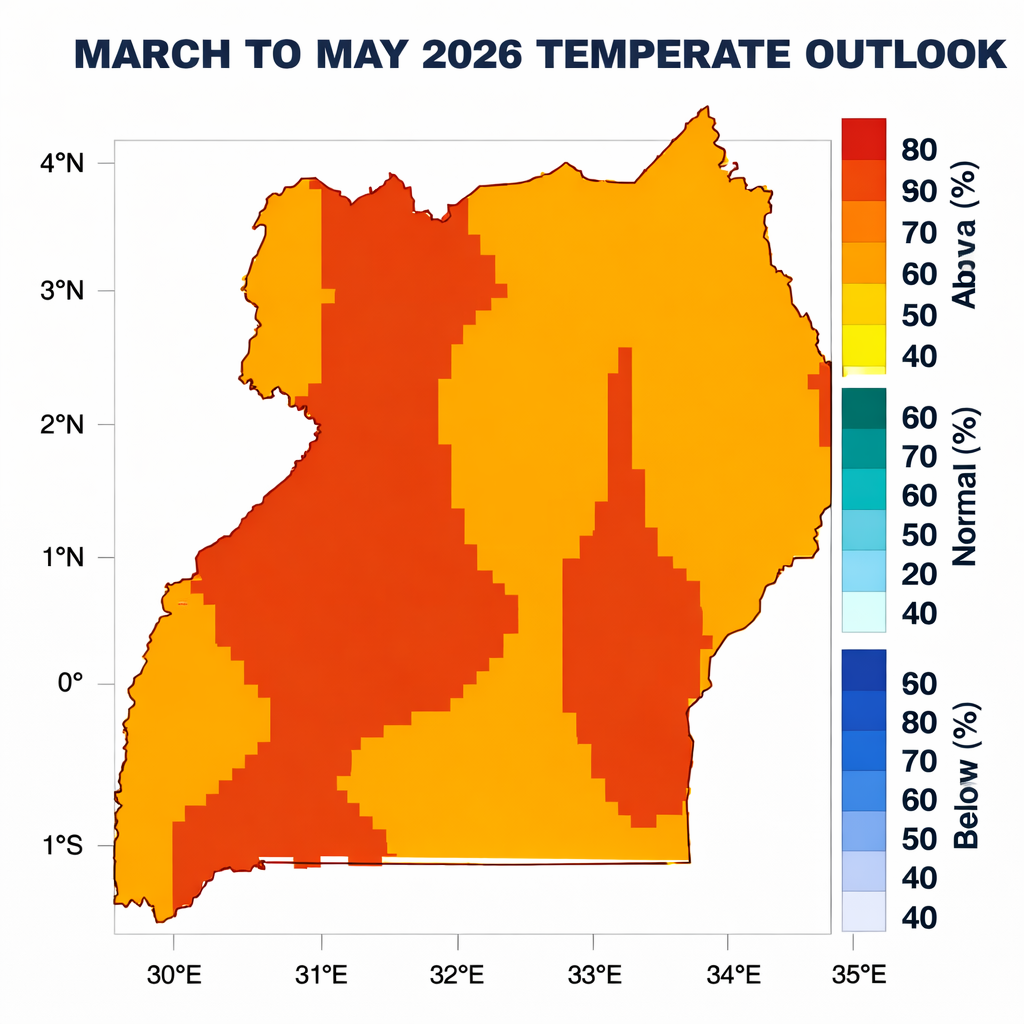
The seasonal temperature outlook indicates that most areas of Uganda are expected to experience warmer-than-normal conditions during the season.
Higher temperatures combined with rainfall can:
• accelerate crop growth
• increase evapotranspiration
• increase pest and disease pressure in some crops
Farmers should pay attention to soil moisture management and pest monitoring.
Regional Forecast Details
Southwestern Region
Districts include Kabale, Kisoro, Rukungiri, Kanungu, Ntungamo and nearby areas.
Expected conditions:
• Rains already starting with intermittent showers
• Seasonal rains expected to establish between late April and early May
• Peak rainfall around mid-April
• Near-normal rainfall expected overall
Mid-Western Region
Districts include Hoima, Kibaale, Kagadi, Kikuube, Buliisa, and Masindi.
Expected conditions:
• Rains expected to establish by early March
• Peak rainfall mid-April
• Near-normal to above-normal rainfall expected
Central Uganda
Districts include Kampala, Wakiso, Mukono, Mpigi, Kalungu, Rakai and surrounding areas.
Expected conditions:
• Seasonal rains already starting in several areas
• Peak rainfall between mid and late April
• Near-normal rainfall expected across the region
Eastern Uganda
Districts include Iganga, Busia, Jinja, Tororo, Mbale, Bududa, and surrounding areas.
Expected conditions:
• Rains expected to establish by early March
• Peak rainfall from April to mid-May
• Rainfall amounts expected to be near-normal with slight tendency toward above-normal
Mount Elgon Region
Districts include Mbale, Bududa, Sironko, Bulambuli, Kapchorwa and Kween.
Expected conditions:
• Strong rains expected
• Peak rainfall from late April to early May
• Near-normal to above-normal rainfall expected
Karamoja and Northeastern Uganda
Districts include Moroto, Kotido, Kaabong, Amudat and Nakapiripirit.
Expected conditions:
• Seasonal rains expected to start between early and mid-March
• Peak rainfall late April to early May
• Near-normal rainfall expected
Northwestern and Central Northern Uganda
Districts include Arua, Nebbi, Zombo, Gulu, Lira and Oyam.
Expected conditions:
• Rains expected to establish by early March
• Peak rainfall mid-April to early May
• Near-normal to above-normal rainfall expected
Practical Advice for Farmers
To benefit from the rains while reducing risks:
Planting and crop management
• Plant early using improved seed varieties
• Combine early-maturing and late-maturing crops
• Use mulching to conserve soil moisture
• Construct drainage channels in water-prone fields
• Practice integrated pest and disease management
Soil and water conservation
• Apply soil conservation practices such as contour farming
• Maintain trenches and drainage systems
• Avoid cultivation on steep slopes without soil protection
Post-harvest management
• Use proper drying techniques
• Use raised drying racks or solar drying systems
• Store produce in well-ventilated facilities
These measures help farmers protect yields and maintain food security.